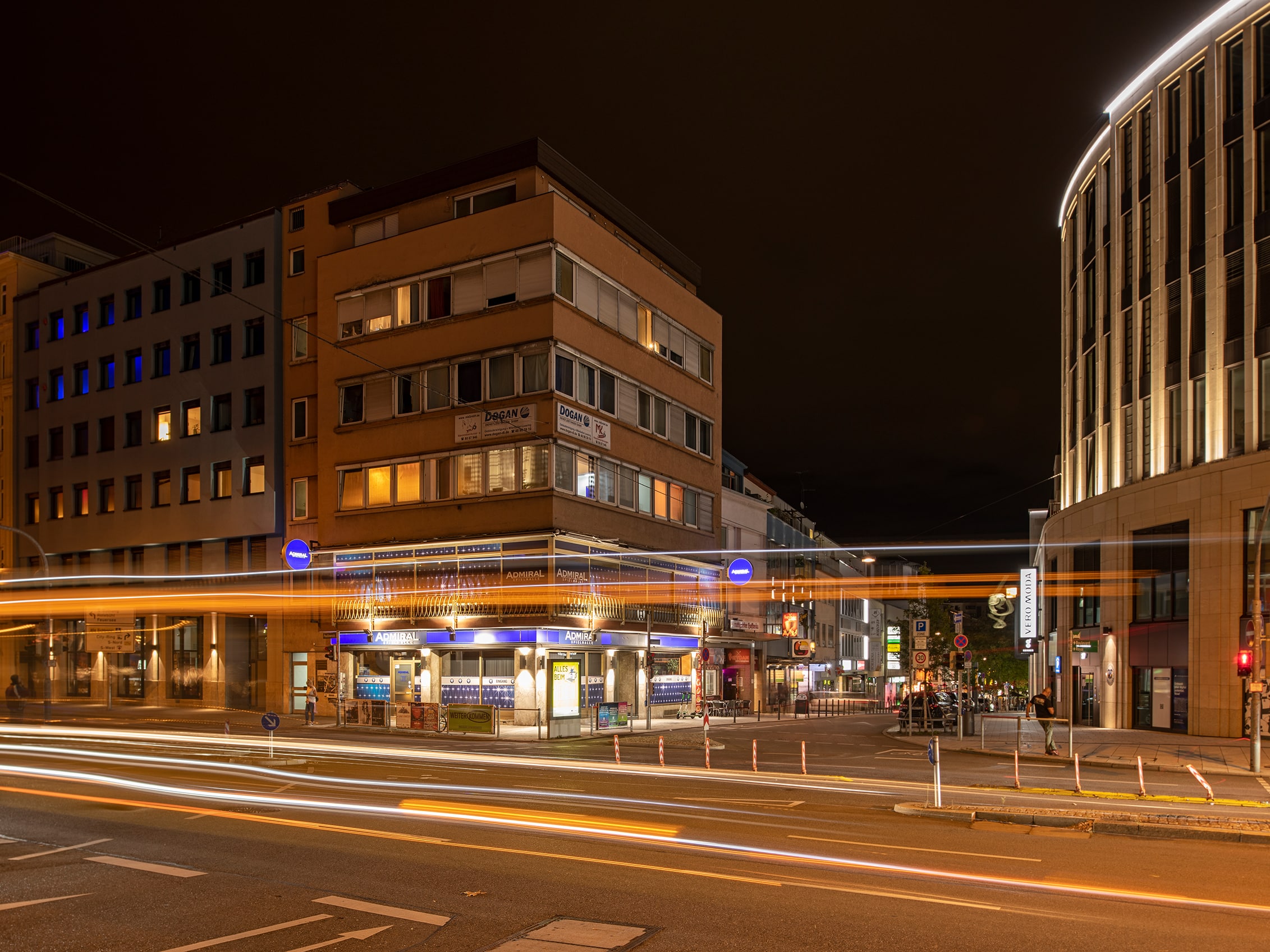
From the Ground: Reimagining Architecture and the Politics of Situated Urban Futures
IBA’27 board of trustees article
By Marcos L. Rosa
The ethos of the European city has long been anchored by a collective condition: a spatial ground structure that fosters coexistence, walkability, collective infrastructure, and civic life. Reinterpreting it today—when this ethos is increasingly challenged by privatization, fragmentation, and the hypercommodification of space—means reclaiming those foundational values by reimagining them through the lens of care, non-extractivism, and collective responsibility. This text proposes that »the ground«—understood not only as a spatial surface but as a social, ecological, and symbolic interface—offers a critical lens to reflect on contemporary architectural and urban futures, drawing from the ongoing debates within IBA’27 on city-making. This perspective allows us to question dominant urban paradigms and explore how new spatial imaginaries may emerge from the reconfiguration of the ground.
»Ground« refers to more than a physical or topographical condition. It designates our relationship with the world — material and symbolic, visible and invisible — and serves as a critical lens to explore how urban planning, urban design and architecture respond to social demands, ecological degradation, and extractive economies. It brings into focus the forms of life, affection, labour, and care that are often made invisible in dominant spatial logics. To speak of the ground, then, and to think of the grounds to design it is to speak of power and resistance, of what is built and what remains buried — and to ask how architecture might make these correspondences legible and livable.
In recent years, a growing body of architectural and urban thought has re-centered the ground — not as mere terrain or surface, but as a site of relation: spatial, social, ecological. This perspective, shared across diverse disciplines and practices worldwide, demands us to look beyond the object-building –autonomous architectures– toward the infra-ordinary conditions –understood from the dialectics of designed space and experience– that define the possibilities for everyday urban life.
In the wake of a rapidly transforming world, the very format of an international exhibition may reveal its potential not only as a stage for architectural production, but as a medium of collective inquiry. The IBA 27 in Stuttgart may provide fertile ground for engaging with both design and disobedience — planned futures and insurgent presents. Accordingly, we find ourselves at a moment that offers a chance to sharpen our capacity to read, inhabit, and transform the ground as a critical site of intervention and imagination.
Under these lenses, common binaries such as top-down and bottom-up practices, extractive and inclusive approaches, care and production, and the relational dimensions of building are tested, reworked, and often exceeded. Marisol de la Cadena’s suggestion to read such »excess«—that is, the situations that exceed the status quo—may inspire us to reimagine the ground not as a supposedly neutral base—a ›generic‹ platform for development that, instead, defines very specific ways of mediating life—but as a space of negotiation and entanglement—a place where material infrastructures meet forms of care, in correspondence with a diversity of knowledges, forms of making, producing, and relating to the world.
In this task, the architectural plinth and its thresholds set the ground of the city to become a place for collective experience and potential encounters–both physical and theoretical. That place is disciplinarily defined as the ground floor, which is the ground of the city—a site defined by its capacity to shelter diverse and often diverging experiences in space.
From Exchange to Use: Rethinking Value in the City
In a world where space is increasingly defined by its mere exchange value, the criticality of the design of the ground challenges us to come back to terms with the use value, as appreciated from Henri Lefebvre’s reading. This perspective illuminates the demand that design define a clear correspondence between the intention of the architectural project itself and social practices — Lefebvre’s everyday life. To think of urban space, urban form, and urbanism in those terms is to think of them in architectural terms, defining a task for architecture to reimagine a world by weighing those tenets.
While historically the use value of urban space is often presented as having played a civilizational role in the conceptualization of what came to be known as the European city, it has recently been increasingly threatened by the hypercommodification of space, conceptualized through disconnected, autonomous, and excluding architectures — also pervasive in the global north.
Mediating Urban Life: Architecture and the Social Ground
If, as geographer Milton Santos insisted, space is social, the task of designing space will undoubtedly translate the spatiality of social, cultural, economic, and political forces at play. Furthermore, that task entails the possibility of mediating correspondences with the world that are not yet given. These include the challenge of responding to transformed ecological landscapes, the inclusion of emerging knowledges related to non-extractive practices, and the possibility of localized thinking and making applied to contemporary forms of urban production and care.
This line of thought resonates with experiences from the global south, where the making of cities has long unfolded through plural and often invisible agencies—informal practices, relational negotiations, situated knowledges, and collective forms of care that challenge dominant spatial paradigms. While often reduced to narratives of precariousness, these practices cultivate alternative ways of relating to the ground—as a living spatiality shaped by ecological interdependencies, affective labour, and social practices. These experiences do not merely expose what is missing in dominant models; they reveal that the ground itself—multifaceted, unstable, and negotiated—calls for an architectural response. This is not a design of the fixed or complete, but a design of the not-yet-stable—a mode of architecture that seeks to mediate and sustain diverse forms of life through situated, non-extractive practices of spatial transformation.
Situated ›Productivity‹: New Grounds for Urban Life
Here is where a certain situatedness may become productive. Groundedness — in site, in struggle, in relation — is not a limit to architectural knowledge but its very condition. Reimagining futures is a task that shall emerge from particular, specific and singular grounds. Rather than importing or exporting models, a more complex task demands one to learn to listen across situated knowledges and to construct with them.
Hence, IBA’s final phase in Stuttgart may well set the grounds for what could be an opening toward new disciplinary beginnings, but not without uncertainty. Architecture must continue to ask what forms of social practices and urban life the city can genuinely hold, nurture, or risk displacing. Can the grounds we are building upon—material, ecological, and symbolic—truly indicate other ways of relating to the world? Might they open up alternative spatial imaginaries, or are they at risk of reproducing the very extractive and exclusionary patterns they seek to contest? The possibility remains open as its realization depends on our capacity to confront complexity, to embrace situated knowledges, and to sustain forms of care and coexistence that resist simplification.
Living Together: Ground as Infrastructure for Coexistence
These questions echo through a handful of IBA’27 projects in the Stuttgart Region, where the productive city is reimagined through new arrangements that challenge the possibility of many ways of being and relating to the world to coexist.
At times, that call for a thoughtful design of the ground may translate in what may seem rather simple measures. A strong backbone of these efforts lies in shifting values regarding the adoption of material practices aligned with the ecological turn—foregrounding sustainability, circularity, adaptive reuse, and repair in both discourse and design. This is exemplified in innovative construction techniques and robotic assistance to reduce material consumption, as in utilizing recycled concrete, clay, and wood. These embody the intersection of technological advancement and the environmental crisis, reflected in the building’s design intention.
This may translate in a former industrial site being transformed into a dense, mixed-use neighborhood where the means to a spatial rearrangement fosters ecological renewal by means of relating among a collective of beings, things and new ways of living and working. The preservation of the material features of former factory buildings while integrating new constructions that support diverse forms of occupation, includes productive courtyards that blur the boundaries between workspaces and communal areas, while offices, workshops and shops open directly onto the ground floor, inviting ambiguity and encouraging permeability and informal exchange. A green park meadow along the river enhances ecological connectivity and provides shared space for care, leisure, and encounter—supporting both human and non-human forms of life.
Elsewhere in the region, previously separated agricultural, industrial, and commercial zones are reconceived as an experimental field of urban coexistence. The integration of urban agriculture within the city fabric supports local food production and repositions ecological cycles within everyday life. Here, the ground becomes both infrastructural and symbolic: a shared layer where difference is negotiated through proximity, and where care is cultivated through material and spatial alternatives. Multi-generational housing developments incorporate reused materials and alternative property regimes, encouraging forms of living-together that resist exclusion and support relational forms of dwelling. These projects not only reduce extractive footprints; they articulate new social imaginaries—relational, productive, and situated—through the very design of the ground.
If these projects are to illustrate a shift toward non-extractive (or perhaps less-extractive), more inclusive, and more ecologically responsive urban developments, a key to redesigning the experience of these shifts seems to lie in the design of their ground floors and their ability to accommodate a myriad of ecologies, programs, and economic activity. This is defined by a multiplicity of efforts to recompose the urban ground as a relational, shared, and negotiated space—open to difference, attentive to its limits, and responsive to the demands of the present.
There is probably very little architecture can do if it remains inscribed exclusively within the frameworks defined by prevailing economic logics. These logics often reduce the scope of design to efficiency, profitability, and formal delivery—neglecting the multiple, interwoven layers that actually shape our urban existence. The question is whether architecture can still open space for critical inquiry—into how we live, how we relate to one another, and how our spatial practices might reflect more just and situated ways of inhabiting the world.
Hence, the criticality of the ground in every project of the IBA does not lie simply in proposing alternatives within accepted paradigms, nor is it merely constructive; it is about keeping space open for interrogation, uncertainty, and transformation. Reevaluating space, examining the logics that underlie design and notions of ›productivity‹ and articulating a political project, it implies a willingness to test and stretch the architectural project beyond its disciplinary and operational boundaries, acknowledging its embeddedness in social, cultural, political, economic, and technological systems, while remaining attentive to forms of life that resist or escape these systems. This work of testing, questioning, and redefining is necessarily limited by the conditions of its own production—funding structures, regulatory frameworks, professional constraints—yet it is precisely within these tensions that architecture must operate, risking a synthesis of a spirit of its time, if it is to contribute meaningfully to the production of more just, situated, and livable futures.
As we experience this process of spatial transformation, we are asked to look carefully through the lenses offered by the ground, from the ground floor itself. It is within these »excesses« that not-yet-formed-futures begin to surface—through responsive, situated practices that cultivate solidarity, sustain difference, and reimagine the ground as an active site of possibility for inhabiting a world in crisis—ecologically, socially, and spatially.
In this regard, the ground cannot be understood solely as metaphor or political terrain—it is also a built, contested, and lived condition. These dynamics and their spatial articulations are neither abstract nor universal: rather, they unfold across many IBA’27 projects, where the ground reveals how ecology, infrastructure, and forms of coexistence can be materially reconfigured. It is in these sites of power—in their unresolved tensions and partial arrangements—that architecture engages with the real, spatial conditions of transformation.
About the author
Marcos L. Rosa is an architect and urban planner, as well as a professor at the University of Rio de Janeiro. His work focuses on collaborative planning processes and the relationships between the planning, use and perception of spaces.
He was curator of the 11th São Paulo Architecture Biennial and has taught and conducted research at institutions including ETH Zurich, the Technical University of Munich and the London School of Economics. He is a member of the Board of Trustees of IBA’27.